Wednesday, 31 January 2018

Aussie Jeannie Lewis: Free Fall through Featherless Flight (1973) and Tears of Steel (1976)


I love that 2nd cover, just so wildly different.  And the upside down foot on the verso of her first!  Great concept.  Oh the creativity of those long ago days!

The first album which is really just SSW pop-rock with relatively little in the way of progressive moves, can be zoomed through relatively quickly, though a heartbreakingly titled track called Fasten Your Wings with Love stands out:


Listen to how she ascends to the summit of that high C in the course of the chorus a la Bianca Castafiore, high enough to shatter the uppermost glass windows of the burj khalifa.  Quite awe-inspiring vocal cords there.

There is nothing here to prepare you for her 1976 double album, which doesn't just dip its toes into progressive rock, it takes a long bath in it, though unfortunately not consistently throughout.
When I first heard the song called "Face" I really almost fell off my chair, this time, hearing its abrupt changes from one minute to the next:


Almost like a cubist version of a crooner's song.  This was written by another Aussie called Peter Boothman.  I thought for sure the artist herself had written the lyrics:

If we peeled off the layers 
would you be afraid to appear
with a mask made of clay

You can see that the songs are selected from a very wide range of sources, including Graham Lowndes (note that he made two highly recommended folk albums in those days), Jimmy Webb (our old favourite the Moon is a Harsh Mistress, not as good as Radka Toneff's however), Paul Williams, David Bowie, etc., but I'll let you discover these riches for yourself.

Suffice it to say you can look forward to hitting the title track: Tears of Steel - 14 minutes long, with "lyrics" by Pablo Neruda.

Album is dedicated to her father.  Thanks Jeannie...
More to come from  her.


Monday, 29 January 2018

Back to Anders Koppel with the 2-LP Album from 1987


When I saw this one hasn't been available thus far, digitally, I thought I better grab it.  On the one hand his 1977 work was magnificent, on the other hand, we know he headed down a bit of a dark side street in his Bazaar phase.

So there's a lot of material here to slog through, not all of it good of course, many a promising composition turns silly halfway through as if we were watching one of those 1960s Hollywood comedies in which everyone starts running around in circles followed by a small firetruck.  I personally can't stand dixieland music or simple blues and it drives me crazy to have to listen to either one.  On top of that, on side b the tracks run into each other which caused me a great deal of frustration and grief.

First track is called Indgang:


Pay attention to the long tracks, of which there is one on each of sides c and d, they are well worth hearing.

Note that all regular instruments are played by Koppel, which is admittedly rather impressive-- especially since both electric guitar and keyboards are equally highly proficient.

Blurb:
A collection of musical pieces used for films, theater and commercials.


Friday, 26 January 2018

Ken Narita's 1972 album


Another fabulous pop-rock Japanese SSW monster discovered by my friend, let those blissful finds keep on a-truckin'...  Narita-san seems to have made a few back in the day, at least one other album preceding this was disappointing for me and very simple in composition compared to the intricacy in evidence on this parcel, which in contrast is colored in by some really jaw-dropping arrangements in the standard seventies-pop manner.

The song about "green" really grew on me, with its repeated melancholy minor verse resolving into a Carpenters-like chorus (Superstar, maybe?), surrounded by an outrageously well charted string section, with harp tinkling and electric guitar soloing all over the place around the singing.


 A few songs are just as good.  Similar, really, to School Band, but less dynamic.
Great little gem.  Thanks a million!


Wednesday, 24 January 2018

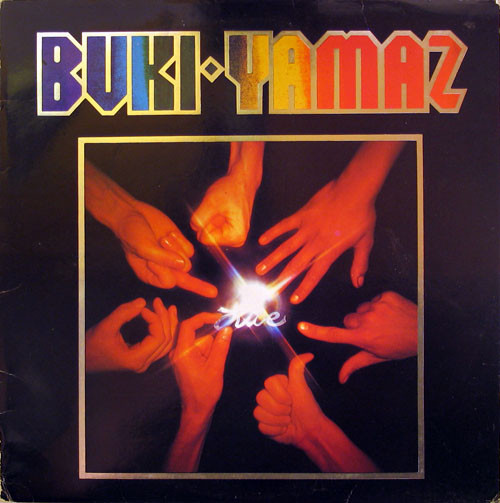
Buki-Yamaz from 1975 to Live 1978 (new rip of first)


I think we all know this light fusion band from Denmark which again featured some Latin sounds added (as was the case with Tequila, or even Dopo Jam), a proper rip was requested for their first and accordingly is presented today; for me the best work was the second though, which had a bit of an edge in the compositional beauty dept.:


(The second track, called Rainflower.)

Note that Aske Bentzon, who played the flute so perfectly throughout these works, made a great solo album subsequently, called Badminton, check it out: it fits in nicely as a continuation of the oeuvre of this band.  Kasper Winding, the drummer of Buki, is his half-brother apparently.  Our old favourite Kenneth Knudsen (Anima, Coronarias Dans, Entrance, and Secret Oyster) played synths on the first album, but disappeared by the second.

Aske travels to paradise:


Monday, 22 January 2018

Cardboard Village's 1973 Sea Village


Let's go with a total change in direction today.  I recall one commentator mentioning what a relief it is to hear a bit of gentle acoustic folk as a break from all the fusion here.

Relatively advanced songwriting in the folk dept. is featured on this 1973 one-off from US band. 
B6's gentle Three-dollar Hat: