Friday, 9 August 2019

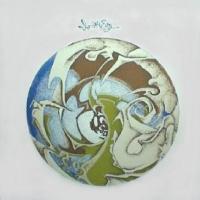
Fusion band Birdland, 3 albums


From discogs:

Jazz band from Bern, Switzerland formed in Spring 1978 by Yugoslav students. 
Members: 
Predrag Banković - guitar 
Dragan Marinković - bass (1978-1979) 
Boris Relja - piano 
Beat Rauch - drums, from 1979 percussion 
Umil Bengi - percussion (1978-1979) 
Borivoje Vukadinović - bass (from 1979) 
Peter Hurni - drums (from 1979)


The first album never lets us down, from beginning to end, with the hard energy of the electric guitar, reminiscent of German masters Dzyan.  You can't kill the beast, indeed:


But the beast did suffer some, a bit of osteoarthritis already in its older age on the second album.
And it fared even worse by the third, though it featured that one wonderfully inventive churning composition Golgotha:


Perhaps time for a DNR on the beast now.


Wednesday, 7 August 2019

Pondus's Myrornas Frammarsch (1979) and Myrbein's Myrornas Krig (1981)


Both bands made but one album each.  Beginning with Pondus, who present to us an all over the place varied mix of folk, rock, and fusion-- and that's by no means a complaint for us of course, just for the music industry (RIP), like Kebnekajse (I refer mostly to their III album) and Samla Mammas they use acoustic guitar and folk to spice up the electric guitar passages.  One of my favourite all time straight up songs taken from a progressive rock album, shoulda been a hit in the seventies, is the stunning song Livets Låga:


I love the casual melancholy of the melody and the way the chord progression builds upwards in a climactic way till the flute plus electric piano take it back down again for another verse.  God forbid we should ever come across such a well-crafted beautiful song again written today.

The album closes out with a masterful guitar-based fusion lava outpouring called Flumlåten well worthy of Mahavishnu John McLaughlin:


Turning our attention now to Myrbein (info here), let's start with the second track, called De Fyra Stånden.  Here we have echoes of co-nationals Blakulla, prog masters Kultivator (recently reissued to CD with some very disappointing bonus tracks), with the heavy grinding fuzzy electric guitarwork:


Most of the tracks feature grinding electric guitar, always a difficult endeavour in progressive rock, here not always successful, but often enough for us to walk away happy.
The album title has a wiki entry here, btw.


Monday, 5 August 2019

American Ocean's Sunrise from 1982


From discogs:

Early 80s jazz fusion band from Cincinnati, OH. All-analogue keys, nice fuzzy rock guitar, all original compositions. This is a pleasant surprise, as it definitely has more of a mid-to-late 1970s sound. The trumpeter uses no effects, and sounds a little like Mike Lawrence did on those later 11th House LPs. The compositions are all over the place... some have definite Return to Forever type vibes, some veer closer to Stanley Clarke's stuff circa "Journey to Love" (lots of slap bass), some approach a sort of slick fusiony post-bop... not a bad LP and fairly typical of US private fusion recordings of the late 1970s (though it is from 1982!).

Despite the manifest enthusiasm of the blurb presumably from a reviewer with fairly low standards, it's not as good as others of the same ilk we've posted before like Franklin Street Arterial, Landress-Hart, etc., etc.  So many others we've posted before here in these pages.

But I love the way they go just fusionary crazy on the track called The Bubble:


Obviously, I found this one when I was searching backups for the previous German Ocean.

Friday, 2 August 2019

Ocean's Melody (81) and Double Vision (84)


Here are two albums from an ELP-like keyboards outfit that produced just miracles of compositional glory in the progressive tradition of the seventies, a bit behind the times, but, Happy the Man (that) said Better Late than Never.  If you don't know them you'll be shocked at the quality of their ideas.  The discogs page shows the artists, specifically, the composers' names are Mike Hoffman and Peter Kunz, for what it's worth.  Moving on to the music, here's an exemplary piece from the first album called 7 to 8 Melody with a completely inappropriate for the times mellotron solo:


And the next piece Wild Pig sounds like something left off by mistake from a Le Orme album smack in the middle of the most classic period of Italian prog.  Amazing.

Shockingly, the follow-up album, although comprising shorter material with the standard decadal LP number of songs, is just as impressive, showing they were quite intransigent, or perhaps foolhardy, in their dedication to creative originality.  Consider Ballade Zwo, which goes farther than anything on the first album into the verboten modern university composition classical direction:


This is followed by a track dedicated "To Keith" (Emerson, presumably).
I love the way both albums reward repeated listening, with new tangents and directions always to be discovered.

Wednesday, 31 July 2019

Screaming Gypsy Bandits Back to Doghead


I've known of this band for many years thanks to the slightly proggy album they released in 1973 called In the Eye, their only official release (reissued in the 1990s), and note, it was dedicated to the once ultra famous Charles Bukowski now utterly forgotten.  To my complete shock I found out recently that a collection of unreleased material from Screaming Gypsy Bandits came out called Back to Doghead, which was full-out progressive rock, and chronologically preceding the official release.
We're talking unusual harmonies, chord changes, abrupt tempo switches, gratuitous weirdness, etc.  So for their personal history clearly they toned down the insanity of their roots for the record company.

Rot Nozzle has a distinctly Zappaesque influence, obviously:


I love how the track called Shells meanders its way through such a spacey atmosphere:


And the pentatonic electric guitar riff which starts out sounding so humdrum proceeds into uncharted territory quite soon enough on Medicine, evolving again throughout like the previous example into a much more grandiose thing:


There is quite a bit trash in here too, but that's to be expected.