Friday, 3 May 2019
Francois Jeanneau, 1975-1977 (Une bien curieuse..., Ephemere, Techniques Douces)
François Jeanneau made two beyond brilliant progressive fusion LPs (the first 2, of course) then fell back into the rut of ordinary smooth contemporary jazz. Have a look at his discography to see what great bands and artists he played with. Incidentally I've already posted his wonderful, more experimental collaboration with other French luminaries in 1983's Prao. He plays the sax for the most part, as you can see from the photos.
The title track of the 1975 work:
The album closes out with the surreal synthesizer magic of A l'Ombre Des Forces Obscures - Triton II. It mystifies me why we don't hear composition like this anymore, on the surface of it, the melody and ostinato pattern below are quite simple, straightforward, easy to understand. A lot of interest is added by the overall sound, the synthesizer and flute combination, the tone of the bass arpeggio. Then the last section, dubbed Triton II, uses whole tones to provide that customary 70s intergalactic spacewalk sound. (Oh that space nostalgia-- when we were promised a moon base by 1999 and intergalactic warp drives by 2100--)
His next album (presumably), is made of one-word titles, and continued in the same progressive ECM jazz/synthesizer flute overlay that worked so well in 1975, witness the title track of Ephemere:
Note the lovely employment on the fusionary chain-gang of a violin quartet just like in David Rose, Michel Ripoche, etc. (we almost exhausted the violin fusion department on these pages). Like in the previous sample track, the relatively conventional sax plus piano ballad (reminding me a bit of the theme to Martin Scorcese's Taxi Driver) is augmented by some very light synth touches and then the string section returns halfway through, as was so artfully done on the well-loved masterpiece Aaltonen - Donner Strings. Of course, the melody and chords are superbly original in comparison to the relatively simple Bernard Hermann's theme to Taxi Driver.
Sadly the crazy progressiveness flags by the time of 1977's Techniques Douces, with a return to the long improvisations and generic contemporary acoustic jazz style format:
(Title track too.)
The Europamerica collaboration from 1977 was, I also thought, bland (with music mostly written by Frenchman Jef Gilson.) Subsequently, the 1980 album Akagera was quite disappointing, ditto 1985's Soli Solo Plus. (And last post's ONJ 1986 comes next after.) Hopefully the link for Prao is still active, if not, I can reup. As usual, I give up on artists after the late 80s. That's because I don't need more disappointment, I get enough of that at home with my family.
But those two masterpieces, they sure gave me, and give me, a lot of joy in the listening. The endless fantasy worlds of his originality never cease to amaze me, never bore, every time I listen I hear something new and surprising.
Wednesday, 1 May 2019
Some Orchestre National de Jazz by request, limited time only
This is a French big band which was created in the mid 80s when there was a resurgence of classic acoustic jazz styles. Note that the inaugural album in 1986 featured and was led by sax player Francois Jeanneau, whose first three albums I will post separately next time. As it says on discogs, Francois also plays flutes, keyboards and synthesizers. This explains why there are such brilliant compositions by him on this 2-LP set (rendered down like duck fat from 2 breasts to one CD missing a lot of the meat), as well as on his masterpieces from the mid-70s (come back for those if you like duck).
His fantasy in bop is strikingly non-conventional, the kind of rendition that I would frankly be shocked if I heard in our local city's jazz festival which I've made fun of repeatedly in the past. And given that its spirited and almost atonal originality might lead to cardiac arrest in some of the older jazz fans who still dig "Body and Soul" or "Sweet Georgia Brown", I'm actually hoping they never play anything like it there, and for the added reason I won't feel I'm missing anything by skipping it for the 24th straight year in a row:
The album is rounded out by some compositions by the immortal Mike Gibbs, Gil Evans, Christian Chevallier (anyone remember that name? for reference see here), etc. Altogether, a really really enjoyable outing by this very professional band, not afraid of being somewhat progressive in a kinda hackneyed genre (i.e. big band). Not as progressive altogether as Dauner's United Jazz + Rock, though.
Subsequently they seem to have lost their direction in the absence of conductor Jeanneau, with '87 with Antoine Herve proving disappointing for me. One track that is not hit delete instantly and moreover is appropriate for those of us living in the Northern Hemisphere, is Dans la Neige:
That same progressive spirit that blows in like a 70s ghost with synthesizer and digital strings is completely missing from the remainder of the album. Yeah, video killed the radio star, and the 80s killed prog.
Finally, in 1988 we have a trip to Africa, a musical trip which I generally avoid due to the incessant percussive monotony, which, presumably, hypnotizes the musicians to the point they never leave the one key or even chord for twenty minutes until the producer presumably says he has to take a bathroom break. There was one good track on that particular outing. See if you can find it.
Note that in 1989 a release was made with my old French favourite Claude Barthelemy (I don't have that one). Two that I did find are with our immortal Robert Wyatt (2009) and Astor Piazzolla (2012), whose compositions I love. Unfortunately both of those later ones proved quite disappointing, which was a surprise to me.
Monday, 29 April 2019
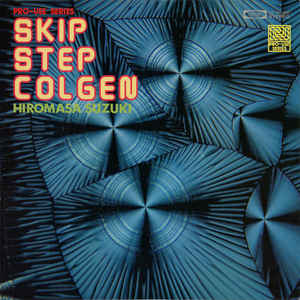
Colgen Band (Hiromasa Suzuki) in A Lonely Falling Star from Japan 1981
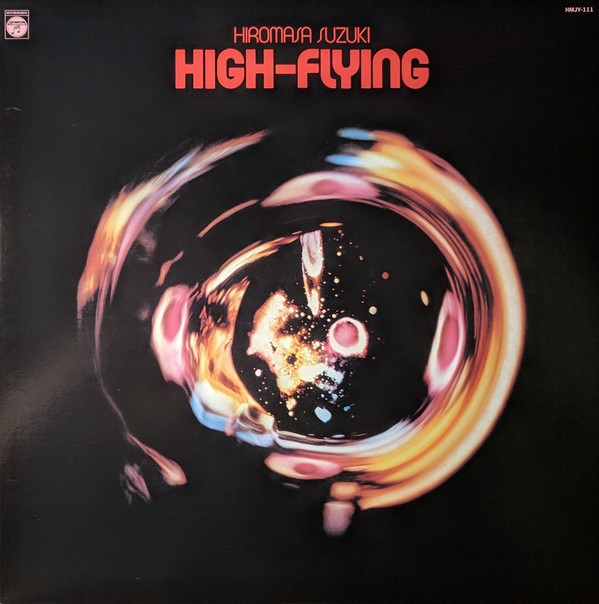
Jazz Pianist Hiromasa Suzuki is probably best known for the oddly popular album Rock Joint Cither Silk Road, which personally left me cold. He went on to make a slew of jazz or fusion albums, all relatively light or low energy (not to the level for example of the gorgeous Hairpin Circus Kikuchi) throughout the seventies. Forgettable, or disposable. Then, in 1981, rechristened the Colgen New Band, he produced a wonderful and excellent instrumental fusion epic.
Already by the first track, A Heavenly Maiden, you've hit the ball out of the park for me:
And knocked out a few spectators who weren't paying enough attention. Hope they don't get post-concussion syndrome or these loud musical sounds will aggravate and annoy.
Then the interest and energy keep up all the way through at least until the closer, when our high-powered vehicle crashes into the pedestrian, a cover version of the tired old standard Stella by Starlight. God I hate those jazz standards.
I'll throw in some more LPs from this artist, altogether more disappointing. There are occasional good pieces, in the grand fusionary tradition, but most are bland and generic.
Friday, 26 April 2019
Back to Kanzaki on the Road (aka Hisaaki Kanzaki): Open My Road and Little Road Gang
A very happy man indeed, from the looks of it, perhaps due to the great décolleté (or outright nudism). Long long ago and far away I posted his third album which was called Long Romantic Road (the titles are suspiciously all similar aren't they). It had a special place in my heart due to the references to Waikiki, where we migrate to every March like the humpback whales that swim each winter to Maui from as far away as Alaska.
It's obvious the discogs database for this luxuriously smooth saxophonist is incomplete. Note the odd presence of American vibraphonist Mike Mainieri here, contributing a couple of songs on the records. (Some of his solo albums were really good, if you remember.) All the music starts to sound alike though, alternating between gentle fuzak instrumental to instrumental fuzak gentleness virtually imperceptibly. My ears perked up at the lovely closer to Little Road Gang, called Still Like a Child, referencing (perhaps) the immortal Herbie's Speak Like a Child:
Sometimes uptempo sometimes more languid all the music really is the same as the above.
The earlier posted album, his last presumably, is his best.
Wednesday, 24 April 2019
More Jun Fukamachi, unbelievably, with the OST Fire Bird from 1978
It's always hard to believe there's more 1970s Fukamachi to rip though by now I should stop expressing surprise. This performance, unfortunately, is by the New Japan Philharmonic Orchestra with compositions by Jun, lacking his signature synthesizer brilliance and ambiance. In that sense it resembles the modern music composed passages in the Woman with the Red Hat, that one of course was tempered by the fact it also had the classic 70s instrumental library/soundtrack European sound.
On the second track surprisingly a synthesizer shows up in the middle passage and is duly integrated:
However for most people the unrelenting classic orchestral sound with loud tympani instead of percussion and ever-squeaky string section unrelieved by the warm human touch of guitar and/or keyboards is a bit much. Perhaps the descent from the ivory tower university classical stratosphere can be most appreciated in track A4:
But I'm so grateful to hear fresh examples of this brilliant, brilliant man.
Subscribe to:
Comments (Atom)