Monday, 9 December 2024

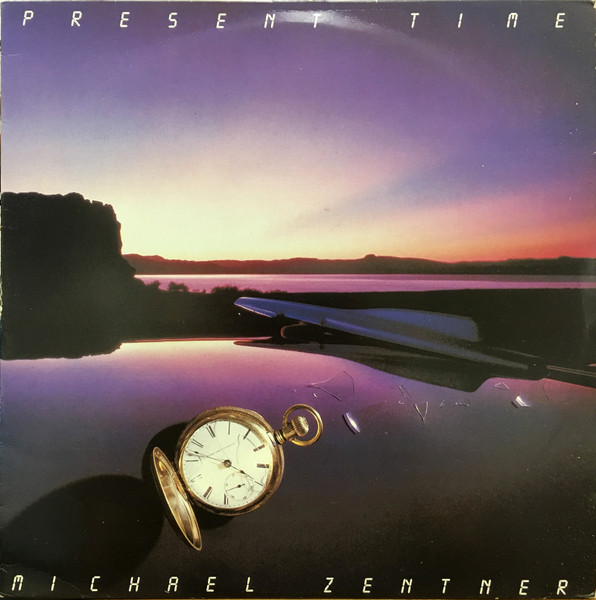
Muffins violinist Michael Zentner in Present Time (1983), Playtime (1995)


Michael Zentner, violinist, is known to everyone here as a performer in the US RIO band The Muffins:

American violinist.
Founding member of Washington DC Art Rock band, The Muffins. Toured England and France with British saxophonist Lol Coxhill and others. Worked with manager/producer Georgio Gomelski on various projects including Georgio's ZU band (which later became the band Material) as one of it's founding members.
First solo album "Present Time" is released in the US, Europe, and Japan. While the album received consistently high marks from critics, it's harp and violin duet Tears and Spheres became one of the first of the “New Age” offerings being aired on US radio.
Founding member of Peter Blegvad's Big Guns - a precursor to The Golden Palominos, with Carla Bley and the Palominos' Anton Fier, Bill Laswell, and Blegvad.
Group and solo electric violin concert performances in the US, Canada, Europe, Middle East, and Latin America along with some session work in Los Angeles and New York City. Recorded self produced second solo album "Playtime".
Embarked on a series of Duo concerts and group performances with John Goodsall. Various appearances in Los Angeles, performing with a variety of musicians including Patrick Moraz (Yes), Tom Fowler, Don Preston (Zappa), Chad Smith (Red Hot Chili Peppers). Some US performances and intermittent but extensive touring in Europe and Latin America.


Present Time from 1983 has an amazing track called Tears and Spheres which with the harp and violin sounds a lot like the preceding Alan Stivell stuff:
(Not sure why the embedded links don't work anymore with archive, but sigh.)

Another track called Cliche you can listen to here:


He then made another solo album called Playtime in 1995 which doesn't quite have the same fierce complexity but I included it down below. 

Friday, 6 December 2024

Alan Stivell's Renaissance of the Celtic Harp from 1971


Real Name: Alan Cochevelou
Profile: Multi-instrumentalist, born January 6, 1944 in Riom, Auvergne, France. Best known for popularising the Celtic harp.
Son of Jord Cochevelou. Was taught the harp by Denise Mégevand. In 1961 he became the "penn-soner" (lead) of Bagad Bleimor[A celtic music band with bagpipes that is.]

I confess I haven't actually ventured beyond this 1971 album with info here, which I heard when quite young. At that time the first track which is called Ys (a legend and mythical city) completely entranced me with the supernatural and ethereal, spacey feeling of the harp which is so reverbed and echoey and the surrounding arrangement. In addition to the harp, notice Alan plays bagpipes, bombarde, and flute on this record. Otherwise he's backed by a chamber orchestra set of players complete with strings and cellos.  Starting with the rainy stormy sounds which were a little overdone in albums back in the day, we move on to that incredibly euharmonious and pleasing harp sound playing arpeggios, before it moves into some obligato patterns repeated and a cello commences a really plaintive melody, a bit like the old Canadian Amakudari album I loved so much back here. On top of that the flute starts playing another melody, really taking it off into the heavens. This kind of complicated acoustic folk is so far beyond the usual ethnic genre in its complexity.  Unfortunately, the remainder of the album is a little more simplistic and to me not necessarily worth remembering and rehearing the way the first track is.

Play it here:

Since the rest of the LP was less interesting in terms of complex composition I didn't venture past this one to see if there's more in his oeuvre worth hearing but maybe someone else can enlighten us on that.

Hopefully others can enjoy this as much as I've enjoyed it in my life.


Thursday, 5 December 2024

Thomas Flinter in 2 from 1978, 1979


It might be the case that everyone is already familiar with this band with a person's name. Info here.  Specifically, the notes state:

Thomas Flinter was a troubadour who lived in the middle ages. He never failed to be inventive and showed his own character as for his musical ideas. As it is he was not always respected for that. This may also be said of our group, and that accounts for the name Thomas Flinter.

The music is really classic prog from the Netherlands, similar to so many others that combine fusion with vocals such as the recently posted Prisma but also like other famous ones like Earth and Fire, or Mayfly, Galaxy-Lin, Finch, or Water Damburst or Supersister-- well, perhaps less fusiony than those guys of course.

The first album is definitely the best with no compromising the fierce proggishness, the second much smoother and more commercial but it definitely has its garden of earthly delights. It's odd that only a year separates the 2.

Old Man is the track that opens the album and presents the music to perfection:


Brass for Farmer T demonstrates the more fusiony and somewhat Zappaesque sounds they were capable of creating, and notice the very professional playing and perfect timing, and the wondrous beauty of the electric guitar soloing, quite magnificently played:


They thew in a fugue in there too to show off their classical education although it's more of Four-Seasons-Vivaldi imitation than a technical fugue, at least not until the end when it does segue into that specific structure.

From the 2nd album which apparently was recorded in 1979 but not released until 5 y later, the track called Changed World always entranced me with its really unique and original chord changes under a well-crafted melody:


With regards to their 'missing album' called TF, info'ed here, note the following:

Not For Sale Promo in fully laminated sleeve.

The initials 'TF' and the Turning Point Records logo are printed on front cover.

Distributor Inelco information on the back. There are no song titles mentioned.

This album appears to contain the same tracks released a year later on the

official second album Thomas Flinter - For A Fugitive (there may be slight

differences in the mix). It seems likely this was a demo or promo edition

intended to attract the record company's interest.

It's sad such great music is still so unknown, as usual. And I can't believe I wasn't familiar with this, heretofore.

Tuesday, 3 December 2024

Eduardo Bort in 1974 and 1983's Silvia [with flac of the first one]


These are the decades in a nutshell: the 70s passed into the 80s from the floating-in-space hippie longhair on the top cover to the smooth guy watching a girl in lingerie on the bottom.

Info discogged here. Their synopsis is (surprisingly) for once quite spot-on:
Spanish rock guitarist and singer (1948 -2020). His 1975 debut solo is widely acclaimed as one of the classics of Spanish progressive rock. It featured a unique strong song style with majestic group arrangements, with dual keyboards including Mellotron and synthesizers.
After disappearing off the scene for 8 years Eduardo came back with a more mellow second album of which one track is dedicated to Carlos Santana. Further recordings exist and he was still active as a musician in 2013. Died 26 February of 2020 after a long battle against cancer, he was 72 years old.

From the first one which was quite the little masterpiece as mentioned before-- I would qualify the above though by mentioning it's more the acoustic style of prog, with some simple songs, and not so much in the complex, symphonic style-- I think the most successful multiple-listens composition is Walking on the Grass which I can enjoy repeatedly to this day:


The second one of course as you can tell from the cover reverted to smooth, commercial, and accessible fusion. I think it would've been shocking had he continued in the same hippie-prog acoustic vein, given the zeitgeist of the eighties. Nonetheless, there's a lot to like in here. It's not quite the same consistent level of quality as what happened with Argentinian Carlos Franzetti where the 1980 album Galaxy Dust just knocked it out of the ballpark despite the late year, but it's worth hearing as long as you try not to compare it to his earlier mid-70s masterpiece.

De vuelta a la esperanza is for me the best track on this one:


Sunday, 1 December 2024

The Grafitti Project (with Hakon Graf) from 1984, requested


Information discogged here.  It should be of interest because of the Hakon Graf involvement, see here from this blog, and also the post for Hawk on Flight his best stuff in my opinion.

Most of the music (by Bent Patey, info'ed here) though is commercial vocal stuff, here's one composition with Hakon that is listenable: